
TLS-RPT is a standard that allows domain owners to receive reports about issues encountered by email clients when attempting to establish secure connections (TLS) with their mail servers. These reports can include information about failed or insecure connections, aiding domain owners in identifying and resolving potential security concerns.
A hypothetical "TLS-RPT Record Checker" could perform the following functions:
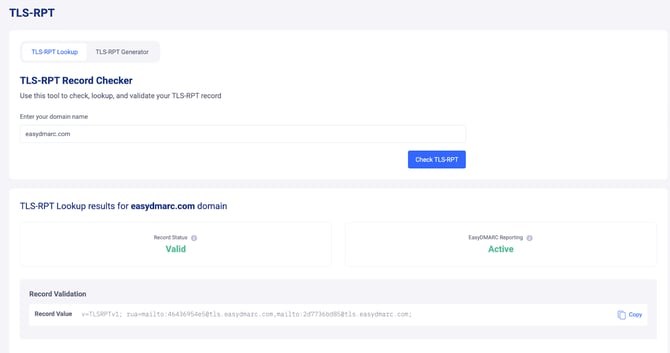
1- Record Validation: The checker might verify the existence and correctness of TLS-RPT records in the DNS for a given domain. This involves looking for the presence of specific TXT records under the _smtp._tls subdomain.
2- Syntax Check: The tool could check the syntax of the TLS-RPT record to ensure it follows the correct standards and includes the necessary parameters for reporting.
3- Reporting: The checker might provide a summary or detailed report on the status of the TLS-RPT records, indicating whether they are correctly configured or if any issues are detected.
4- Lookup and Validation: Users might be able to input a domain, and the checker could perform a lookup to retrieve and validate the TLS-RPT records associated with that domain.
5- Guidance: The checker could offer guidance on how to implement and configure TLS-RPT records, ensuring that domain owners can effectively receive and interpret the reports.
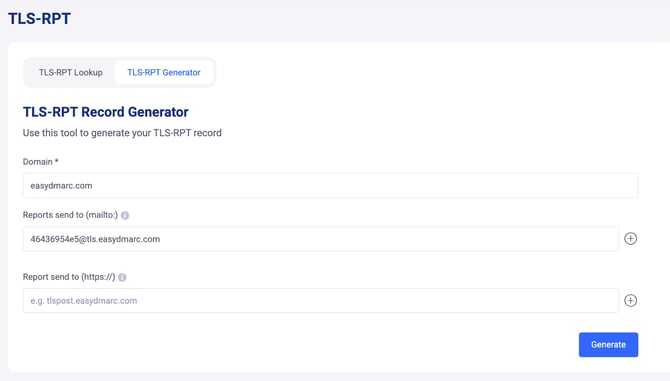
TLS-RPT Record Generator
A hypothetical "TLS-RPT Record Generator" designed to assist domain owners in creating the necessary TLS-RPT (TLS Reporting) records for their domains.
Here's how such a tool might function:
1- Input Configuration: Users would input configuration details, including their domain name and specifications for the TLS-RPT record, such as the email address to receive reports and any additional parameters required.
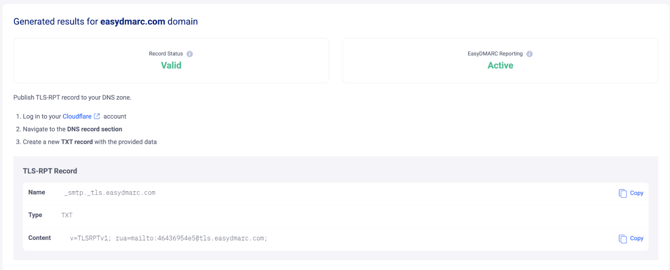
2- Generate TLS-RPT Record: The generator would then create the necessary DNS records, typically TXT records under the _smtp._tls subdomain, based on the provided configuration. This record would include information about where to send the reports, the percentage of connections that should trigger reporting, and other relevant settings.
3- Guidance: The generator could offer guidance on how to implement and publish the generated TLS-RPT records to ensure they are correctly configured and actively reporting.
4- Syntax Validation: The tool might perform syntax validation to ensure that the generated TLS-RPT record adheres to the standards and specifications.
If you experience any limitations, do not hesitate to open a support ticket using this link. Our support team will gladly assist you.