
How to add SPF (Sender Policy Framework)
1- Login into your DNS Made Easy account.
2- Head to your DNS Made Easy DNS section and then to the managed DNS.
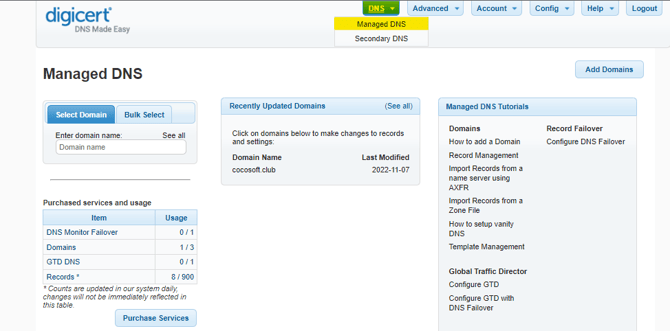
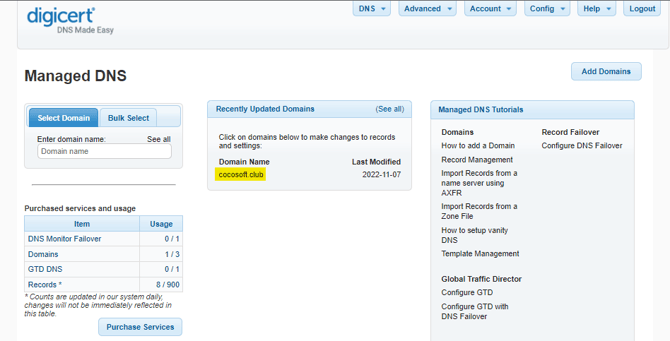
3- Once you click on the managed DNS section then try to click on your domain.
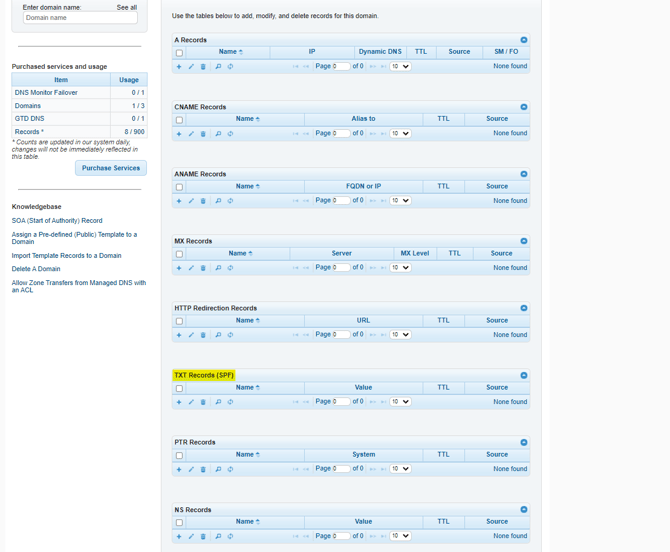
4- Head to the TXT tab and try to create a record.
5. In the Value field, enter your SPF record value. Leave the Name field empty — your root domain is already applied by default.
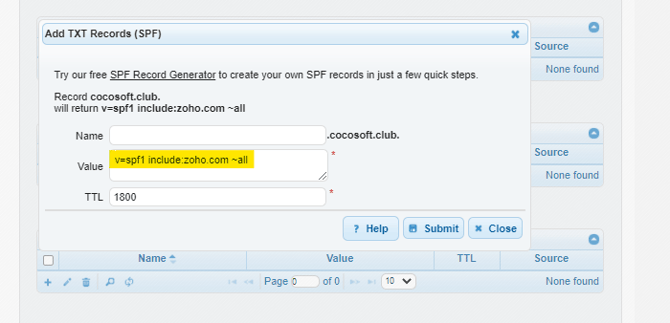
For example:
In this case, we whitelisted Zoho’s SPF in our DNS zone.
|
Record Type |
Name |
Value |
|
TXT Record |
Leave It Empty |
v=spf1 include:zoho.com ~all |
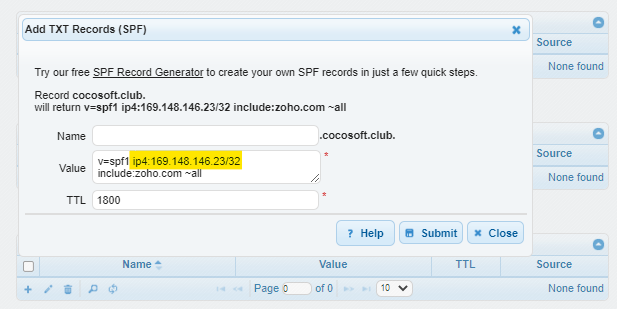
6. If you send email from sources identified only by an IP address, add those IPs to the same SPF record using the ip4: mechanism (e.g., ip4:169.148.146.23/32).
|
Record Type |
Name |
Value |
|
TXT Record |
Leave It Empty |
v=spf1 ip4:169.148.146.23/32 include:zoho.com ~all |
7. Click **Submit** to save your SPF record and complete the DNS Made Easy SPF setup. **Note:** DNS changes can take up to 24–48 hours to propagate fully across the internet.
Note: Having multiple SPF Records for a single root domain is a bad practice and results in authentication failure. If you use multiple sources within your organization, you must have them whitelisted in a single SPF Record.
How to add DKIM (Domain Keys Identified Mail)
It’s the same process for DKIM as well, but we will do some changes for DKIM.
Note: Before diving into steps on how to add DKIM to your DNS Made Easy, it is important to understand that each provider has their own Private/Public Keys that they provide to their customers. In this article, we are focusing on Zoho Mail. We’ve generated the DKIM Public signature from the Zoho Mail portal, and in the next steps, we are going to implement it in our DNS (DNS Made Easy).
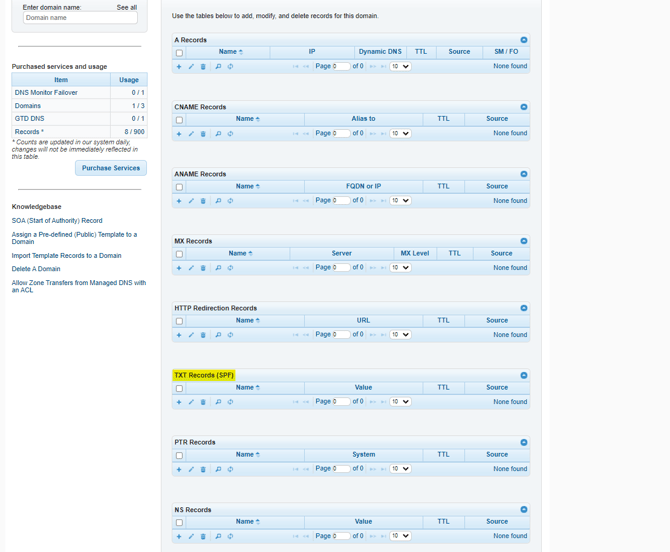
1-Try to add a new record for the same TXT tab.
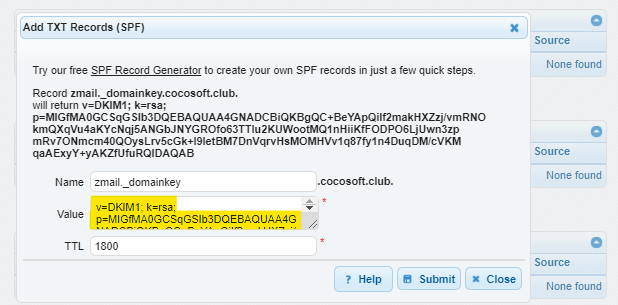
2- Make sure to add your DKIM Record Name and Value.
|
Record Type |
Name |
Value |
|
TXT Record |
zmail._domainkey |
v=DKIM1; k=rsa; p=MIGfMA0GCSqGSIb3DQEBAQUAA4GNADCBiQKBgQC+BeYApQiIf2makHXZzj/vmRNO kmQXqVu4aKYcNqj5ANGbJNYGROfo63TTlu2KUWootMQ1nHiiKfFODPO6LjUwn3zp mRv7ONmcm40QOysLrv5cGk+l9letBM7DnVqrvHsMOMHVv1q87fy1n4DuqDM/cVKM qaAExyY+yAKZfUfuRQIDAQAB |
The Value field must contain the public DKIM key generated from your Zoho Mail portal. Use the key provided specifically for your own domain — do not copy the example key shown above.
3- Click “Submit” to finish your DNS Made Easy DKIM setup.
How to add DMARC (Domain Message Authentication Reporting Conformance)
Now from the same place, we can add the DMARC as well.
There are 2 ways to generate DMARC Record:
- When you directly register on EasyDMARC, our system automatically provides you a DMARC Record upon adding your domain
- You can also use EasyDMARC’s DMARC Record Generator tool to get a DMARC Record
After generating DMARC Record, you need to update it in your DNS Made Easy.
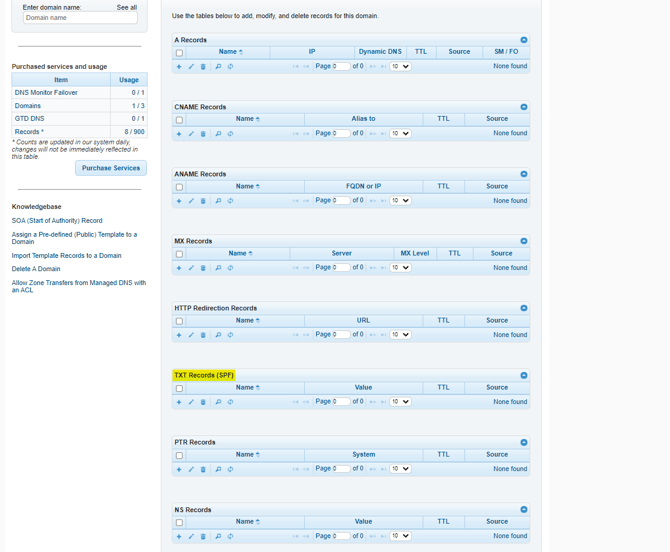
Make sure to add your DMARC Record Name and Value.
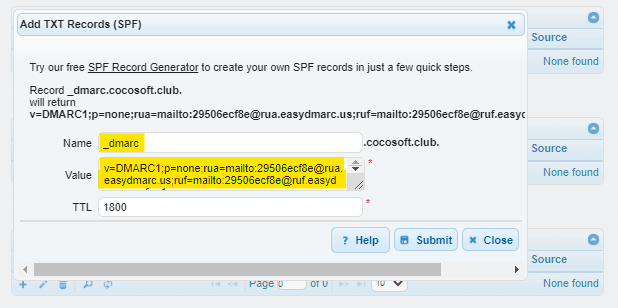
|
Record Type |
Name |
Value |
|
TXT Record |
_dmarc |
v=DMARC1;p=none;rua=mailto:29506ecf8e@rua.easydmarc.us;ruf=mailto:29506ecf8e@ruf.easydmarc.us;fo=1; |
Important Note:
It is always recommended to begin your DMARC journey in monitoring mode (p=none). This allows you to gather reports and identify all legitimate email-sending sources in your organization before advancing your policy to Quarantine (p=quarantine) or Reject (p=reject).
After updating, click “Submit” to finish your DNS Made Easy DMARC setup.